VISUAL ESSAY / INTERSECTIONS

Queue Dynamics at a Signal

FIELD GUIDE

A Queue Moves Backward

At a red light, a queue grows backward even though every vehicle is traveling forward toward the intersection. When green begins, the queue does not vanish at once: discharge at the front and new arrivals at the back jointly determine how the queue boundary moves.

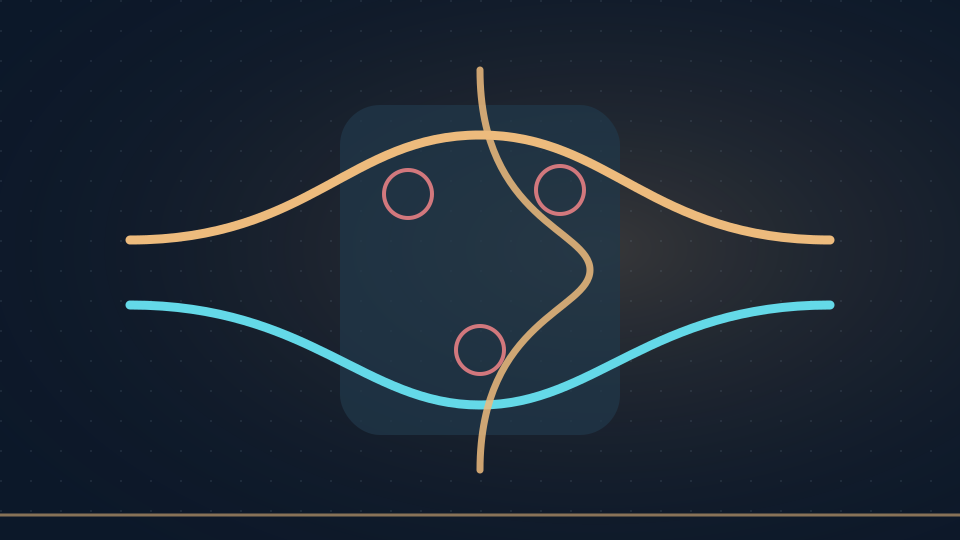
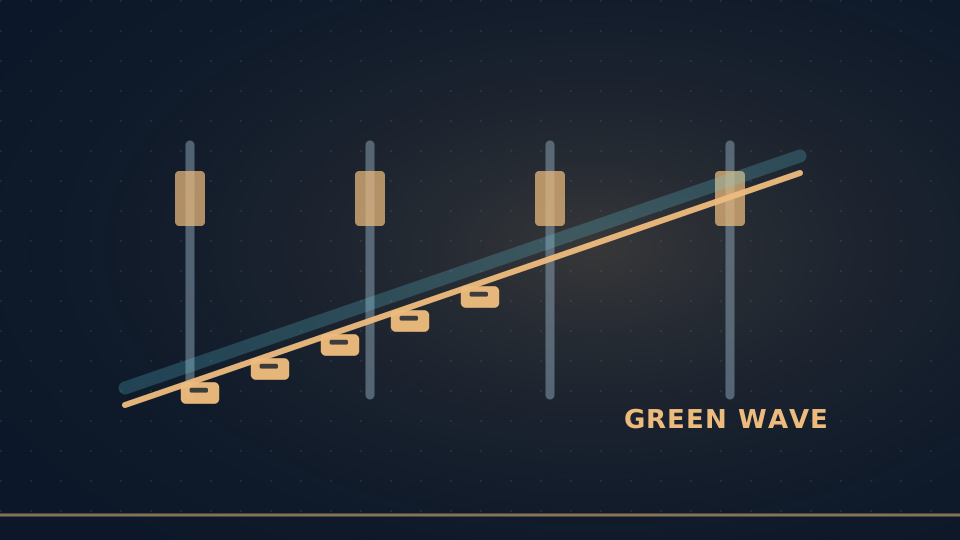
Six signal cycles unfold beside a time-space diagram. Random arrivals produce an observed queue, while a second shape comes from a traffic-wave calculation using arrival and discharge rates. Their comparison shows what a compact analytical model can predict and where individual vehicle timing adds variation. The signal splits and following behavior make the cycle-by-cycle growth and dissipation visible. This matters for estimating storage needs and spillback risk. A queue's length is a dynamic consequence of both demand and service, not a number that can be inferred from the red duration alone.